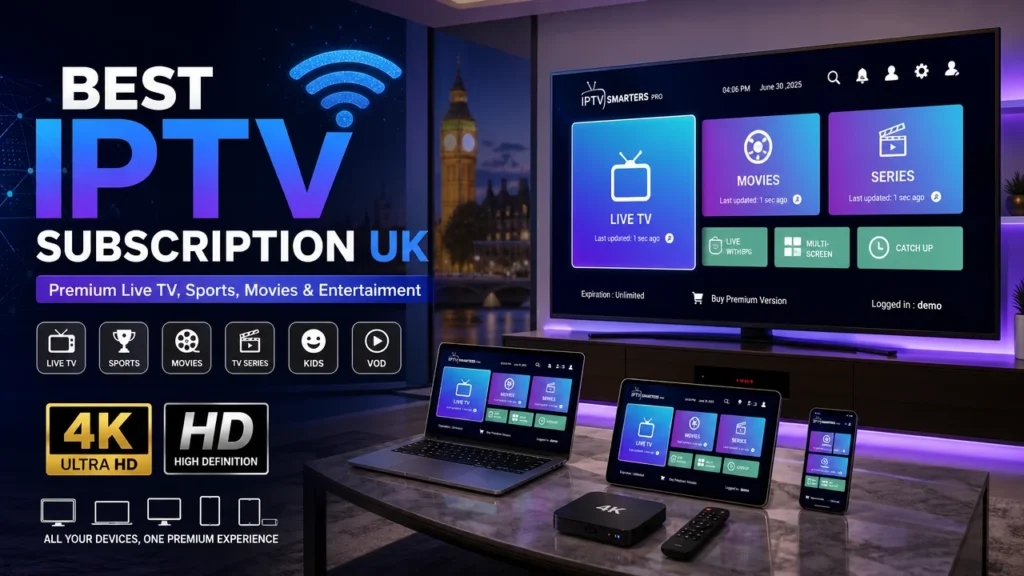
What is IPTV TV? IPTV TV (Internet Protocol Television) is the delivery of live television channels and on-demand video over an internet connection instead of traditional terrestrial, cable, or satellite signals. In plain terms, it turns your broadband connection into your broadcast tower, giving you access to thousands of channels, sports packages, and VOD libraries through an app or set-top box.
The practical difference matters now more than ever. Cable locks content to a physical infrastructure; IPTV uses your existing internet pipe. That means you can watch on a smart TV, phone, tablet, Firestick, Android box, or laptop — often at a fraction of the cost of legacy TV. But not all IPTV services are equal. This evaluation breaks down how IPTV works, how it compares to cable and streaming apps, and exactly who should buy a premium IPTV subscription in 2026.
Executive Summary: What Is IPTV TV?
Best For
Cord-cutters, sports fans, and international viewers
Standout Feature
Anti-freeze 4K streaming with 99.9% uptime
- ✓ Live TV, sports, PPV, and VOD on one platform
- ✓ Works on Firestick, Android, iOS, Smart TV, and PC
- ✓ No long-term contract with 24/7 support
Quick Navigation
What Is IPTV TV? Definition and Core Mechanics
IPTV TV stands for Internet Protocol Television. Instead of receiving signals through a coaxial cable, satellite dish, or antenna, IPTV delivers television content as data packets over an IP network. This is the same network infrastructure that carries your broadband internet, which is why IPTV is often bundled with high-speed internet services.
There are three main forms of IPTV:
- Live IPTV: Real-time channels streamed over the internet, similar to broadcast TV.
- VOD (Video on Demand): Movies and shows stored on a server and available instantly.
- Time-Shifted TV: Catch-up TV that lets you watch previously aired content.
In the consumer market, "IPTV TV" usually refers to a subscription service that aggregates thousands of live channels, sports networks, pay-per-view events, and on-demand titles into a single interface. You install an app on a Firestick, Android box, Smart TV, or phone, enter a subscription code, and start watching within minutes.
How IPTV Works: Delivery Protocols and Playback Flow
Related Reading: Match Master Free Booster: Complete Guide & Claim Tips
IPTV works by converting video content into compressed digital packets that travel over the internet. The playback process involves a source server, a content delivery network, and your device's IPTV player app. When you select a channel, your device sends a request, the server responds with the live stream, and the app decodes and renders the video.
Most premium IPTV services use one or more of these protocols:
- HLS (HTTP Live Streaming): Delivers adaptive bitrate streams over HTTP, which helps reduce buffering.
- MPEG-DASH: Another adaptive streaming standard used for high-quality VOD and live content.
- RTSP (Real-Time Streaming Protocol): An older protocol used for direct streaming sessions.
Your internet connection determines the maximum quality. For standard HD, you need at least 25 Mbps. For 4K UHD, you should have a stable 50 Mbps connection with a wired Ethernet connection or a strong Wi-Fi signal. The recommended IPTV service uses anti-freeze technology and optimized servers to minimize buffering during peak hours.
Real-world application: IPTV shines for live sports, international news, and multi-screen viewing. Instead of paying for a $100 cable package, users get a custom set of channels for a fraction of the price, with the flexibility to watch on any device.
What Is IPTV TV?
The only IPTV service that combines 20,000+ channels, 4K anti-freeze streaming, and a 24-hour money-back guarantee — built for cord-cutters who refuse to overpay.
What's Included:
- ✓ 20,000+ live channels and 80,000+ VOD titles
- ✓ 4K UHD, FHD, and HD streams with anti-freeze
- ✓ 24/7 support and 24-hour money-back guarantee
Guaranteed authentic checkout directly from the provider.
IPTV vs. Cable vs. Streaming Apps: Comparison Matrix
To understand where IPTV TV fits, compare it against the two most common alternatives: traditional cable and mainstream streaming apps like Netflix and Hulu. The table below summarizes the key differences.
| Feature | IPTV TV (Recommended) | Cable TV | Streaming Apps |
|---|---|---|---|
| Delivery | Internet (IP) | Coaxial / fiber | Internet (HTTP) |
| Content | Live + VOD + sports | Linear channels | On-demand + some live |
| Device support | Firestick, Smart TV, phone, tablet, PC | Set-top box required | Most devices |
| Monthly cost | $10–$20 | $60–$150+ | $10–$25 per app |
| Channel count | 1,000–20,000+ | 100–400 | N/A |
| Contract | None | 12–24 months | None |
| Best for | Cord-cutters, sports fans, global content | Traditionalists | Premium originals, no live sports |
Evaluation: Strengths and Weaknesses of IPTV Services
Related Reading: Free PSN Gift Card: The 2026 Legit Guide to Instant Codes
No television solution is perfect. IPTV TV delivers exceptional value for live content, but it is not the right fit for everyone. Below is an objective evaluation based on performance, flexibility, and total cost of ownership.
Strengths
- Cost efficiency: IPTV typically costs 80% less than cable for a larger channel lineup.
- Device flexibility: Watch on Firestick, Android, iOS, Smart TV, PC, or even a tablet.
- Global access: International channels, sports packages, and regional content are easier to find.
- No contracts: Most premium IPTV services offer monthly plans without early termination fees.
- Multi-screen: Watch different channels on different devices simultaneously — ideal for families.
Weaknesses
- Internet dependency: IPTV is only as reliable as your broadband connection. If your ISP fails, your TV goes down too.
- Setup friction: Some users find the initial app configuration and EPG setup confusing.
- Legal variability: Legitimacy varies by provider, so you must choose a service that is transparent about licensing.
- Customer support: Support quality varies widely across the IPTV market.
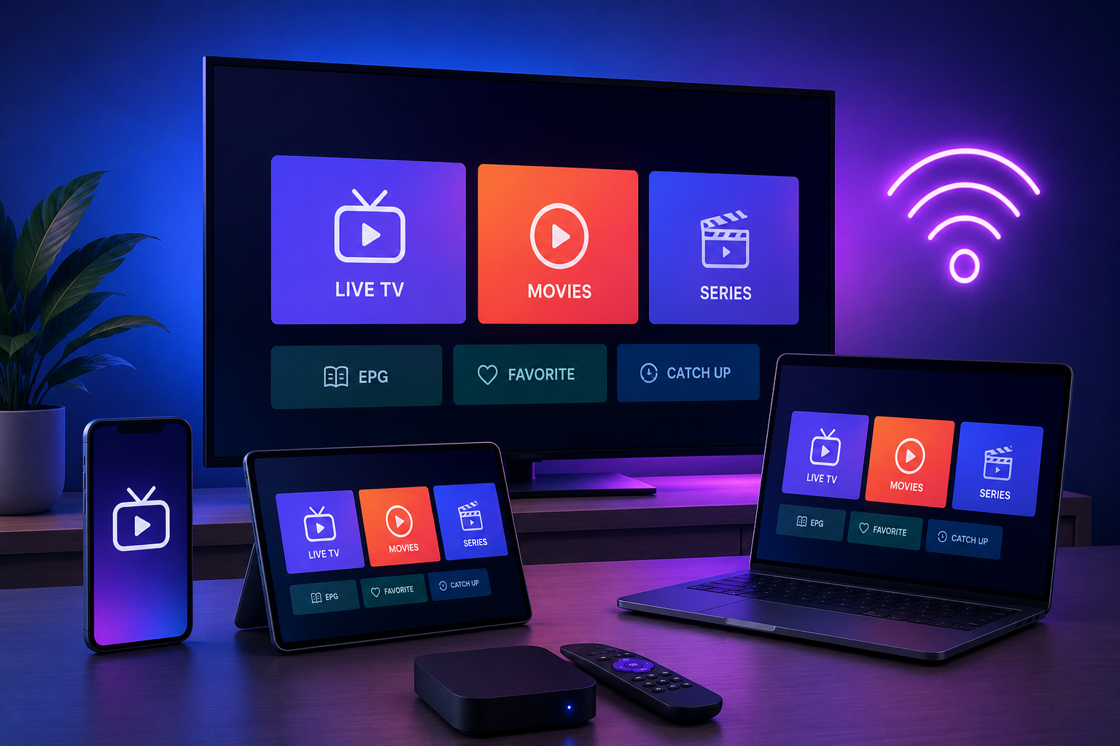
Cost-Benefit Analysis: Is IPTV Worth It in 2026?
Let's look at the numbers. The average American household pays around $100 per month for cable television. That is $1,200 per year for a service with hundreds of channels, most of which you never watch. A premium IPTV TV subscription costs between $10 and $20 per month, or roughly $120 to $240 per year.
If you choose a $15-per-month IPTV plan, your annual savings compared to cable is approximately $960. Even if you add a VPN for security ($60 per year) and a high-speed internet plan you already need for home use, the total cost is still far below cable.
Break-even analysis: Since most IPTV services offer monthly billing with no contract, your break-even point is immediate. There is no hardware rental fee, no installation cost, and no long-term commitment. The main hidden cost is the requirement for a stable 25–50 Mbps internet connection.
Verdict: For live TV, sports, and international content, IPTV TV offers the strongest value in 2026. If you only watch Netflix originals, a streaming app may be enough. But if you want the linear TV experience without the cable bill, IPTV is the clear winner.
Ideal User Profile: Who Should Buy IPTV?
Related Reading: synadentix reviews: Complete Guide - Everything You Need to Know
IPTV TV is not for everyone. The ideal customer has a specific set of needs that align with IPTV's strengths.
You are a strong candidate for IPTV TV if:
- You are a cord-cutter who wants live news, sports, and entertainment without a cable contract.
- You travel internationally and want access to your home country's channels.
- You watch live sports, pay-per-view events, or niche international content.
- You want to watch on multiple devices simultaneously without paying extra per screen.
- You are comfortable setting up an app on a Firestick, Android box, or Smart TV.
You should skip IPTV TV if:
- You have a very slow or unreliable internet connection.
- You only watch on-demand content from Netflix, Hulu, or Disney+.
- You are not comfortable troubleshooting basic streaming issues.
- You demand a fully licensed, carrier-grade service with local customer support.
Our Clear Verdict on IPTV TV
For cord-cutters who want live sports, international channels, and on-demand movies without a cable contract, IPTV TV delivers the strongest value in 2026. It is not a replacement for Netflix if you only want originals, but it is the smartest alternative to cable for daily live TV.
Claim the Official IPTV TV PackageOrders placed via official partner links come backed by the original satisfaction guarantee.
Frequently Asked Questions
Is IPTV TV legal?
IPTV technology itself is legal. The legality depends on the content rights and the provider you use. A legitimate IPTV service operates with proper licensing and clear terms of service. Always choose a provider that is transparent about its content licensing and offers responsive support.
Is IPTV TV safe to use?
Safety depends on the provider. Reputable IPTV services use encrypted connections and do not require excessive permissions. If you are testing a new provider, use a VPN and a dedicated streaming device to protect your privacy and avoid potential malware risks.
What internet speed do I need for IPTV TV?
For standard HD streaming, a stable 25 Mbps connection is sufficient. For 4K UHD streaming, we recommend at least 50 Mbps. Your speed should be consistent, not just fast on paper. Wired Ethernet connections perform better than Wi-Fi for live sports and high-bitrate channels.
Can IPTV TV be watched on a Firestick?
Yes. The Amazon Fire TV Stick is one of the most popular IPTV devices. You install an IPTV player app, enter your subscription details, and start streaming. Most premium IPTV services are fully compatible with Firestick, Android TV, and Smart TV platforms.
What is the difference between IPTV and OTT?
IPTV traditionally refers to video delivered over a managed IP network, often controlled by an ISP. OTT (Over-the-Top) content, like Netflix or YouTube, is delivered over the open internet. In practice, the terms overlap. Most consumer IPTV services use OTT-style delivery with an IPTV app interface.
Does IPTV TV require a contract?
Most premium IPTV services offer monthly, quarterly, and annual plans with no long-term contract. This is one of the main advantages over cable. You can cancel or pause your subscription without early termination fees.
Which is better: IPTV TV or cable?
For price, channel selection, and device flexibility, IPTV TV is better for most cord-cutters. Cable offers superior reliability in some areas and does not depend on your home internet connection. If you need a simple, guaranteed signal and do not mind paying more, cable may be better.
Can IPTV TV replace Netflix?
Not exactly. IPTV TV is designed to replace live television and cable, while Netflix is a VOD service for premium originals. Many IPTV subscriptions include a large VOD library, but if you want exclusive originals like Stranger Things or The Crown, you will still need Netflix or a similar service.
FTC Compliance: This article contains affiliate links. We may earn a commission if you purchase through our links at no additional cost to you. Our editorial recommendations are based on independent research and analysis.